
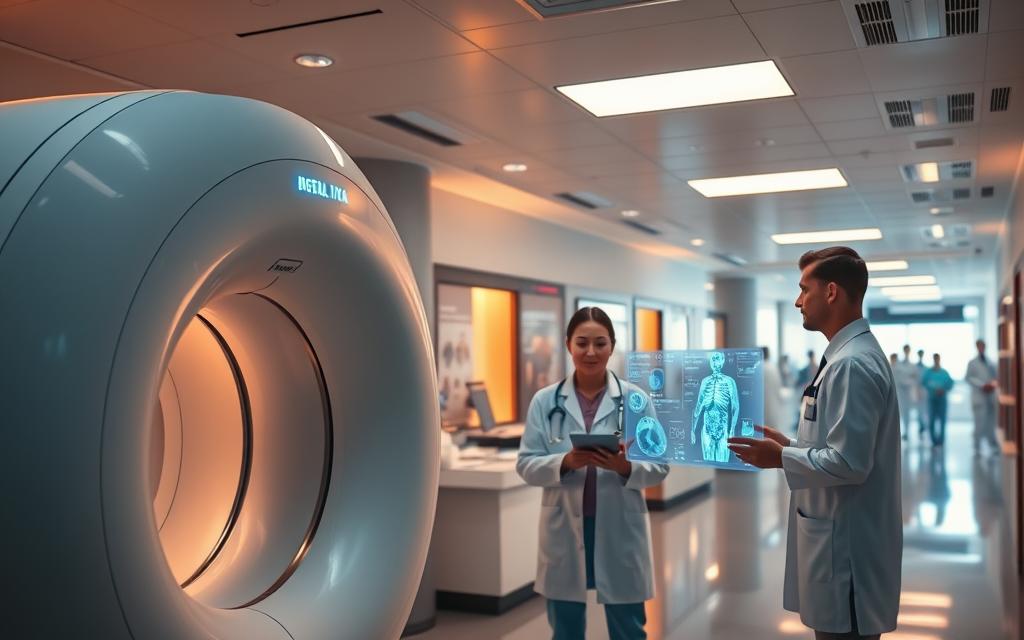
Modern healthcare has changed a lot thanks to medical technology advancements. These new tools have changed how we care for patients, from the first check-up to the final treatment.
Doctors today use tools that would amaze doctors from the 1800s. They have advanced imaging, precise drug delivery, and new medicines. These are just a few examples of what’s available now.
These technologies are now key in healthcare. They make diagnoses more accurate, treatments more efficient, and patient results better. They cover all areas of healthcare.
This progress is getting faster, bringing new chances for doctors and patients. The move from simple tools to today’s advanced systems shows how far medicine has come.
The Transformative Impact of Technology on Modern Healthcare
Technology has changed medical practice a lot. It has made diagnosis, treatment, and patient care better. The move from simple devices to digital systems is a big change in healthcare.
Historical Evolution of Medical Technology
Medical technology has evolved a lot. It started with simple mechanical tools and now we have complex digital systems. Early tools like mechanical infusion pumps needed manual help and constant watching.
From Basic Instruments to Digital Systems
The move to digital systems started in the late 20th century. Old devices were replaced by computerised ones. These new systems could dose medicines precisely, send alerts, and record data.
This change was not just about better technology. It changed how doctors treated patients.
Related Posts:






Early imaging like X-rays became digital systems. MRI and CT scanners let doctors see inside the body without surgery. This was a big step forward.
Key Milestones in Medical Technology Development
There have been key moments in medical technology. Antibiotics changed how we treat infections. Anaesthesia made complex surgeries possible. Now, technology is used in more places, not just big hospitals.
Devices like defibrillators can be monitored remotely. This shows how technology can improve care by using what we already have.
Current Technological Landscape in Medicine
Today, medicine uses digital systems that connect everything. Hospitals use these systems to share data and work together better.
Integration of Digital Systems in Healthcare
Digital healthcare systems are key in modern medicine. They combine health records, diagnostic tools, and communication. This lets doctors work together and make better decisions.
Hospitals use digital healthcare systems to connect different areas. This ensures doctors have the right information at the right time. It makes treatment more precise.
Global Adoption Rates and Trends
Technology adoption varies worldwide. Rich countries use advanced digital healthcare systems more. Poorer countries are catching up with telemedicine and mobile health.
There’s a trend towards Health 2.0 technologies. These focus on making healthcare easier for patients. Money also plays a part, with some hospitals choosing fancy equipment to look good.
| Technology Type | Adoption Rate (High-Income Countries) | Adoption Rate (Middle-Income Countries) | Primary Drivers |
|---|---|---|---|
| Electronic Health Records | 85-95% | 45-60% | Regulatory requirements, efficiency gains |
| Telemedicine Platforms | 70-80% | 55-70% | Accessibility needs, cost reduction |
| Advanced Imaging Systems | 90-98% | 65-75% | Diagnostic accuracy, competitive positioning |
| Remote Monitoring Devices | 75-85% | 40-55% | Aging populations, chronic disease management |
The future looks bright for healthcare technology. Artificial intelligence and machine learning will make diagnosis and treatment even better. They will help healthcare worldwide.
How Does Technology Help Medicine in Diagnostic Processes
Modern medicine has changed a lot thanks to new technology. This change has made it easier, faster, and more accurate to find health problems. It has helped many areas of medicine.
Advanced Imaging Technologies
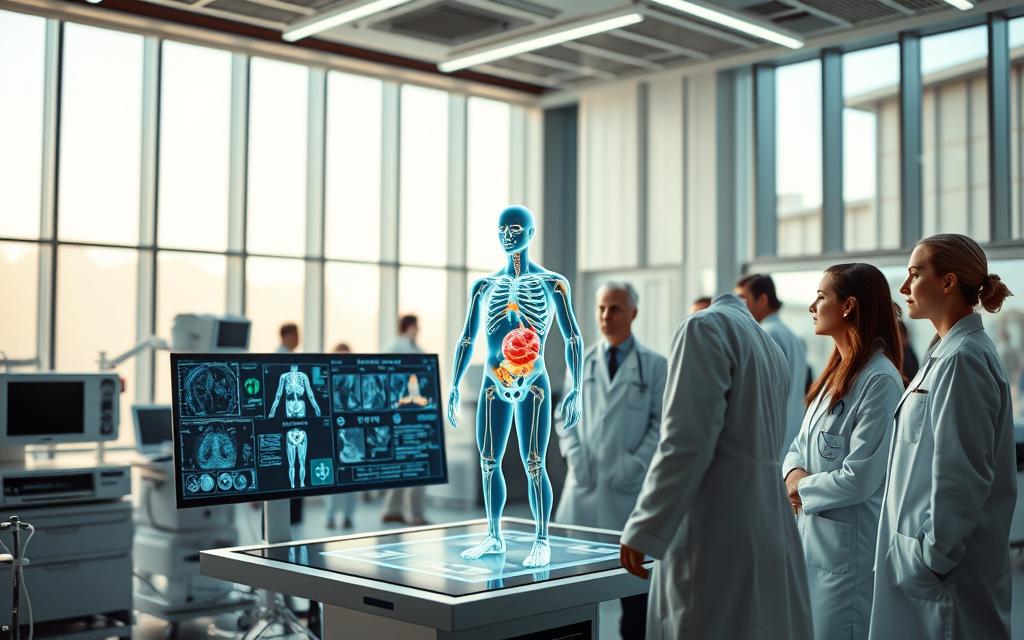
Medical imaging has seen big improvements. Today’s systems show things more clearly than ever before. This means doctors can spot problems earlier and more accurately.
Magnetic Resonance Imaging (MRI) Enhancements
New MRI machines have stronger magnets and better software. This means they can show more detail and work faster. Patients are more comfortable, and doctors get better information.
Computed Tomography (CT) Scanning Innovations
New CT scanners use less radiation and can see more clearly. They can even tell different materials apart. This makes CT scans safer and more useful for doctors.
Ultrasound Technology Improvements
Ultrasound machines now have better transducers and software. They can show 3D and 4D images of the body. This makes it easier for doctors to see what’s going on. Plus, there are portable devices for more places.
Laboratory and Testing Advancements
Lab tests have changed a lot with new technology. This has made it easier for doctors to find and track diseases.
Automated Blood Analysis Systems
Modern machines can do blood tests fast and accurately. They can do full blood counts in just minutes. This helps doctors make quick decisions. It also means fewer mistakes and more tests done.
Genetic Testing and Sequencing Technologies
Genetic tests have gotten a lot better. They can look at a person’s genes in detail and at a lower cost. This is helping doctors understand diseases better.
Rapid Diagnostic Testing Kits
Testing kits can give results in minutes, not days. They use special sensors to find certain markers. This makes it easier to screen people and helps in emergencies.
Artificial Intelligence in Diagnosis
AI in medical diagnosis is a big step forward. It uses algorithms to look at medical data in ways humans can’t.
Machine Learning Algorithms for Pattern Recognition
AI can spot patterns in medical images that humans miss. It gets better with more data. Studies show it’s very good at this.
AI-Assisted Radiology and Pathology
AI helps doctors read complex images. It’s better at finding things like pneumonia than doctors. It also makes mammograms more accurate.
Predictive Analytics for Early Detection
AI looks at lots of data to find people at risk. It uses health records, genes, and lifestyle. This helps doctors catch problems early.
Technology keeps getting better for diagnosing diseases. These changes help doctors give better care. They make healthcare more accurate, timely, and tailored to each person.
Technological Advancements in Treatment Modalities
Modern treatments have changed a lot thanks to new technology. They now offer patients better and more personal care. These changes include new surgeries, targeted treatments, and ways to treat patients from afar.
Minimally Invasive Surgical Technologies
Surgeries today are much less invasive than before. They use new tech to do complex jobs with small cuts. This means less pain and quicker healing for patients.
Robotic-Assisted Surgery Systems
Systems like the da Vinci Surgical System help surgeons see better and move more precisely. They remove hand shakes and allow for very fine work in small spaces.
Laparoscopic and Endoscopic Innovations
New laparoscopic tools have better images and flexible parts. They work inside the body with little disruption. Endoscopies now include capsule cameras and laser tools for detailed looks without big cuts.
Precision Medicine and Personalised Treatments
Precision medicine technologies have made treatments more personal. Instead of the same treatment for everyone, it’s tailored to each person’s needs.
Genomic Medicine Applications
Genetic tests find specific genes linked to diseases. Doctors use this info to pick the best treatment for each patient based on their genes.
Targeted Therapy Developments
Targeted therapies focus on specific disease causes, leaving healthy cells alone. New drugs and treatments are changing how we fight cancer and chronic diseases.
New personalised medicine includes 3D printed implants and drugs made just for you. These advances open up new markets for treatments made for specific genetic groups.
Telemedicine and Remote Treatment Options
Online platforms have made it easier to get medical help. This is great for people in remote areas or with mobility issues.
Virtual Consultation Platforms
Video calls let patients talk to doctors from anywhere. These calls often link to health records for better care planning.
Remote Monitoring Systems
Wearable devices send health data to doctors all the time. This lets doctors catch problems early and avoid serious issues.
Precision medicine technologies bring big benefits but also challenges. They can cause side effects that are hard to spot and manage. AI helps find the right treatment doses and plans to make care safer and more effective.
Technology-Enhanced Patient Care and Management
Technology changes how healthcare is given and how patients manage their health. Digital tools make care smoother and help people take charge of their health.
Electronic Health Records Systems
Healthcare has moved from paper to electronic health records. These systems keep all patient info in one place. This makes it easy for doctors to access and share information.
EPIC Systems Implementation
EPIC systems are a top choice for electronic health records. They bring together data from different areas into one record. This helps doctors work better together and cuts down on mistakes.
Cerner Electronic Medical Records
Cerner systems are known for their data analysis and health management tools. These tools help find trends and improve treatment plans.
Wearable Medical Technology
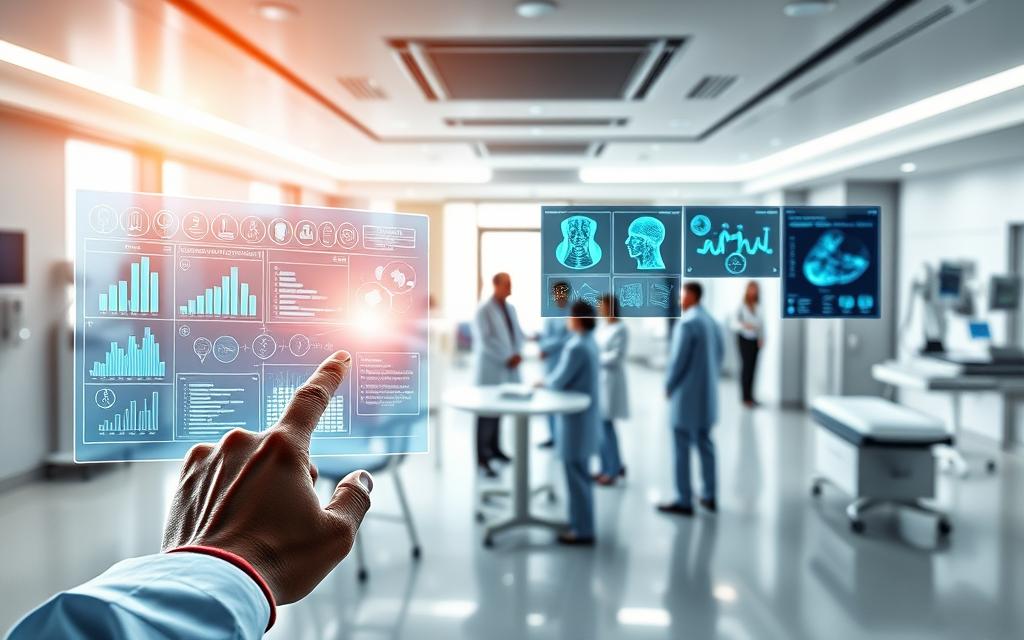
Wearable devices monitor health outside of hospitals. They send real-time data to doctors for better care decisions.
Continuous Glucose Monitoring Devices
These devices change how diabetes is managed. They track blood sugar without needing to prick the finger. They alert patients when levels are too high.
Smart Pacemakers and Implantable Devices
Modern implants watch the heart and send data to doctors. They adjust treatment based on activity. Some even warn of problems before symptoms show.
Mobile Health Applications
Health apps put tools in patients’ hands. They encourage patients to be involved in their care and daily health.
Medication Management Apps
These apps remind patients to take their meds. They track if doses are missed and can refill prescriptions. Some even send reminders to caregivers.
Symptom Tracking and Management Tools
Apps let patients track their symptoms daily. They find patterns and triggers. Many apps create reports for doctors’ visits.
| Technology Type | Primary Function | Key Benefits | Example Products |
|---|---|---|---|
| Electronic Health Records | Centralised data management | Improved care coordination | EPIC, Cerner |
| Wearable Monitors | Continuous health tracking | Real-time data collection | Dexcom G6, Medtronic Guardian |
| Mobile Applications | Patient self-management | Increased engagement | MyTherapy, Symple |
These technologies bring big benefits but also raise privacy concerns. Healthcare must protect patient data well.
The Path Forward for Medical Innovation
Technology has changed medicine a lot. It makes diagnoses more accurate and treatments better. It also makes healthcare more accessible.
Looking to the future, new technologies will change healthcare even more. Fields like nanohealth and brain implants could be game-changers. General artificial intelligence and artificial organs also hold great promise.
But, there are challenges ahead. We must protect patient data and avoid bias in algorithms. It’s also important to think about ethics and fairness in healthcare technology.
Innovation is moving fast, and we need to keep up. By using new healthcare technologies wisely, we can make the world a healthier place.
FAQ
How has technology transformed modern healthcare?
Technology has changed healthcare a lot. It makes diagnosing diseases more accurate and treatments better. Things like MRI scanners and new medicines have made healthcare more efficient.
What are some key milestones in the historical evolution of medical technology?
Important milestones include the discovery of antibiotics and the invention of MRI technology. Also, computer systems and digital health have improved care a lot. These changes have come from making things smaller and cheaper.
How does technology improve diagnostic accuracy in medicine?
Technology helps make diagnoses more accurate. It uses advanced imaging and AI to spot diseases early. For example, AI can find breast cancers and pneumonia better than humans.
What role does artificial intelligence play in medical diagnosis?
AI is great at finding patterns in medical images. It helps doctors spot problems like breast masses and infections quickly. This makes diagnoses more accurate and faster.
How are technological advancements influencing surgical treatments?
New tech like robotic systems makes surgery more precise. It also helps in doing less invasive procedures. This leads to quicker recovery times and better results for patients.
What is precision medicine and how is technology enabling it?
Precision medicine tailors treatments to each person’s genes. Technology helps by sequencing genes and making custom drugs. This makes treatments more effective.
How does telemedicine expand treatment access?
Telemedicine lets doctors see patients online. It’s great for those in remote areas or with mobility issues. It ensures they get the care they need quickly.
What are the benefits of electronic health records systems?
Electronic health records keep all a patient’s data in one place. They help doctors work better together and reduce mistakes. They also help in understanding health trends.
How do wearable technologies contribute to patient care?
Wearable tech like glucose monitors give real-time health info. They help patients manage chronic conditions better. They also let doctors track health remotely.
What should patients consider regarding data privacy in digital health?
Patients should know how their health data is used. With more digital health, data security is key. It’s important to have strong privacy measures and clear policies.