

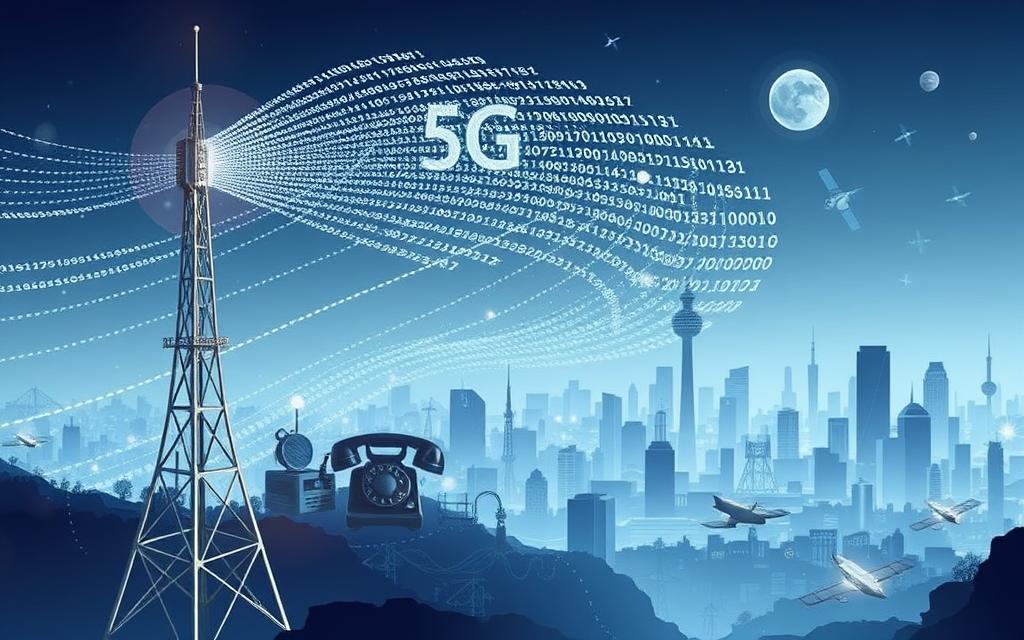
Humanity’s journey shows one key truth – our progress is linked to how we connect. From cave paintings to today’s fast digital networks, sharing ideas is key to our growth.
This change in information sharing is a major technological leap. It goes from the first telegraph messages to the power of 5G networks.
Every step forward has changed how we connect globally, bringing us closer and speeding up new ideas. Knowing this journey helps us value our current tech and look forward to what’s next.
The story of communication shows our creativity and drive for better ways to connect. It highlights our endless effort to share knowledge and bridge gaps across time and space.
How Has Communication Technology Changed Over Time: The Telegraph’s Dawn
The mid-19th century was a game-changer for how we connect. For the first time, messages could travel faster than any messenger. This changed how societies worked and paved the way for future tech.
The Invention and Mechanics of the Telegraph
The electric telegraph was a huge leap forward in the industrial age. It used electrical signals through wires, unlike old methods. It had a simple mechanism: an electromagnetic receiver marked paper tape or made clicks for coded messages.
Early telegraph systems needed a lot of wires and poles. Operators sent and received messages using special gear. The tech relied on new electromagnetism and electrical engineering.
Samuel Morse and the Development of Morse Code
Samuel Morse was key in making the telegraph popular. An American painter and inventor, he was drawn to electromagnetism. He worked with mechanic Alfred Vail to make a telegraph system that worked.
Related Posts:






Morse’s biggest contribution was Morse code. It turned complex messages into simple dots and dashes. This made the telegraph easy for anyone to use.
The first big test was in 1844. Morse sent “What hath God wrought” from Washington to Baltimore. It showed the telegraph’s reliability and sparked excitement about new communication possibilities.
Societal and Commercial Transformations
The telegraph did more than just send messages. It created a global network, making distances seem smaller. It changed life in the 19th century, from government to personal relationships.
Businesses felt the biggest change. They could coordinate across locations quickly. Market news that used to take days now arrived instantly. This opened new doors but also made old ways less relevant.
Accelerating News and Business Communications
Newspapers were quick to use the telegraph. They could report on events as they happened. The Associated Press, started in 1846, used telegraphs for the first national news service.
Financial markets also changed with real-time prices. Stock and commodity markets used telegraphs for data. This made markets more efficient but also more volatile.
Railways used telegraphs for better schedules and safety. Military and diplomacy also saw big changes. The telegraph showed how tech could change society in big ways.
The telegraph set the stage for modern communication. It showed the importance of speed, reliability, and access. It was a start to even bigger changes to come.
The Telephone: Voice Across Distances
The telephone built on the telegraph’s success, changing how we talk to each other. It made real-time conversations possible over long distances, without needing written messages.

Alexander Graham Bell’s Patent and Early Adoption
Alexander Graham Bell, a Scottish inventor, got the first US patent for the telephone on March 7, 1876. Just three days later, he made history by saying “Mr. Watson, come here, I want to see you” to his assistant Thomas Watson.
At first, many doubted the need for voice calls when telegraphs worked well. But businesses soon saw the value in faster decisions and personal connections.
Evolution from Manual to Automatic Switching Systems
The first phones needed manual switching systems with operators. This made it hard to grow and raised privacy issues.
Then, Almon Strowger invented the step-by-step switch in 1891. This allowed people to dial numbers themselves, without an operator. It was a big step forward in phone technology.
Later, crossbar and electronic systems improved call quality and network size. These changes helped the phone service grow worldwide.
Global Reach and Everyday Integration
By the early 1900s, phones reached across continents. The first call from New York to San Francisco happened in 1915. Soon, calling internationally became common, creating a global telephone network.
By the 1930s, about 40% of American homes had a phone. As costs fell and reliability grew, more homes got connected.
Making Personal and Professional Connections Instantaneous
The telephone changed how we talk to each other and do business. Families stayed in touch over long distances. Businesses worked better than ever before.
This instant connection changed our social and work lives. People planned their days around phone calls. The phone changed how we manage time and relationships.
The evolution of phone calls has shaped today’s digital world. Many of our communication habits started with the telephone.
| Period | Switching Technology | Subscriber Capacity | Key Innovation |
|---|---|---|---|
| 1876-1890 | Manual Switchboards | Up to 10,000 | Human operators |
| 1891-1920 | Step-by-Step Switching | Up to 100,000 | Direct dialling |
| 1920-1960 | Crossbar Switching | Up to 1 million | Faster connections |
| 1960-Present | Electronic Switching | Virtually unlimited | Digital processing |
The telephone’s journey shows how technology changes our interactions. Alexander Graham Bell’s invention brought us instant connections, unlike anything before.
Radio: Wireless Broadcasting Emerges
The start of wireless transmission was a big change from old land-based systems. It changed how we get news and fun, making new ways for us to enjoy things together.
Guglielmo Marconi and Pioneering Experiments
Guglielmo Marconi, an Italian inventor, worked hard on wireless telegraphy. He used what others had found about electromagnetic waves to send signals far away.
Marconi showed that radio waves could go over the horizon, which was new at the time. He kept improving his devices, making signals travel further and further.
In 1901, Marconi sent a signal across the Atlantic, showing that radio broadcasting could link continents. This amazed people worldwide and showed the value of wireless tech.
Radio soon became more than just talking between two points. By the 1920s, families listened to music, plays, and news from far-off stations.
This made radio the first big media that could reach millions of homes at once. The mass media history of the 20th century really started with radio.
Applications in Conflict and Peace
Radio was key in both war and peace times. It helped ships stay in touch with the shore and other ships.
In emergencies, radio was a lifeline when other ways failed. It was also great for sending out urgent messages to many people at once.
Facilitating Real-Time Information and Entertainment
Radio let people share in live events together. They could hear sports, speeches, and news as it happened, creating shared moments.
The entertainment world changed a lot with radio. It brought new kinds of shows:
- Serialised dramas that built loyal audiences
- Live musical performances reaching regional audiences
- News bulletins updating listeners throughout the day
- Educational programmes bringing knowledge to remote areas
This radio invention changed our daily lives. It brought us together with scheduled shows and shared moments across the nation.
Television: Visual Communication Revolution
Television changed the way we communicate. It brought moving images into our homes, changing how we get information and enjoy entertainment.
From Mechanical Scanners to Electronic Sets
Two main approaches to television emerged early on. Scottish inventor John Logie Baird worked on mechanical systems in the 1920s. His system used discs with holes to scan images.
Baird showed the first working TV in 1926. His system had 30-line resolution, starting the TV technology journey.
In the US, Philo Farnsworth created the first electronic TV system. His invention, the image dissector tube, was a big step forward. It laid the groundwork for today’s TVs.
Electronic systems eventually won over mechanical ones. Farnsworth’s system offered better quality and reliability, leading the way for future TVs.
Introduction of Colour Television and Global Standards
Colour TV came after World War II, with the first colour broadcast in 1951. It faced high costs and issues with old black-and-white sets.
Different countries had their own colour TV systems:
- NTSC (National Television System Committee) in North America
- PAL (Phase Alternating Line) in most European countries
- SECAM (Séquentiel couleur à mémoire) in France and Eastern Europe
These standards helped with local broadcasts but made international TV sharing hard. Colour TV made TV more appealing and engaging.
Cultural and Educational Impacts
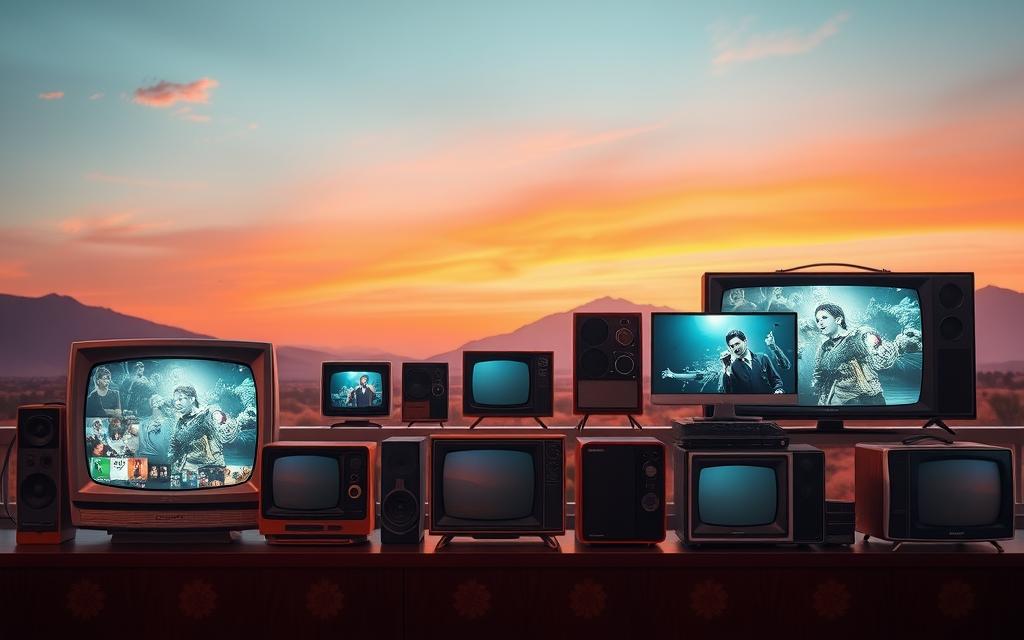
Television quickly became a key part of family life. By the 1950s, TVs were common in many homes.
It changed how we watch news and shows. Live events could reach millions at once, creating big cultural moments.
TV also became a powerful tool in education. Schools used it in lessons, and public TV offered educational shows to homes.
Shaping Public Discourse and Leisure Activities
Television greatly influenced public opinion and discussions. It brought news to people instantly, shaping how we understand and react to events.
TV also changed how we spend our free time. TV schedules set family routines, with favourite shows becoming social events.
TV created new stars and influenced fashion, language, and social norms. It reflects and shapes our culture, showing and changing our values.
As Erik Barnouw said:
“Television has become the mainstream of our popular culture through which most of us learn about the world.”
Television’s mix of images and sound makes it powerful for telling stories and sharing information. It’s not just for fun; it’s a key part of our society.
Internet and Mobile Foundations
In the late 20th century, two big technological changes started. Computer scientists worked on packet-switched networking. At the same time, telecommunications engineers were creating wireless cellular technology. These efforts would eventually come together to make our digital world connected.
ARPANET to Tim Berners-Lee’s World Wide Web
The internet history starts with ARPANET, a US Department of Defence project from 1969. It was a network that connected computers at research places. It used packet switching technology, which kept working even if parts of the network went down.
In the 1970s and 1980s, ARPANET grew to include more than just military use. It reached academic and research groups. The TCP/IP protocols of 1983 made it possible for different networks to talk to each other. This laid the groundwork for today’s internet.
Email, Web Browsers, and Early Digital Interactions
Email was one of the first big uses of the early internet. Ray Tomlinson sent the first email in 1971, using the @ symbol. By the 1980s, email was key for academics and researchers.
Tim Berners-Lee at CERN made a big change in 1989. He suggested a system of linked hypertext documents on the internet. His World Wide Web in 1990 included HTML, URI, and HTTP. These technologies made the internet accessible to everyone.
- HTML (HyperText Markup Language)
- URI (Uniform Resource Identifier)
- HTTP (Hypertext Transfer Protocol)
The first web browser, WorldWideWeb, came out in 1990. Mosaic in 1993 was the first popular browser with a graphical interface. These changes made the internet a place for mass communication and sharing information.
First Generation Mobile Phones and Networks
While the internet was evolving, wireless communication was also changing. The first generation (1G) of mobile networks started in the 1980s. These systems were analogue and only allowed voice calls, with no data services.
Early mobile phones were big and expensive. The Motorola DynaTAC 8000X, released in 1983, was almost 1 kilogram and cost about £2,500. Despite their size and cost, they were a big step forward in personal communication.
Transition from Analogue to Digital Cellular Technology
The move from 1G to 2G networks in the early 1990s was a big step. Second generation systems used digital cellular technology. This brought several key improvements:
| Feature | 1G (Analogue) | 2G (Digital) |
|---|---|---|
| Technology | Analogue signals | Digital signals |
| Primary Service | Voice only | Voice and SMS |
| Security | No encryption | Basic encryption |
| Capacity | Limited users | More users per tower |
| Data Capability | None | Basic data (9.6 kbps) |
The GSM standard, launched in Europe in 1991, became the leading 2G technology worldwide. It introduced SMS, allowing text messages between mobile devices. This simple feature changed how people communicated, mainly among the young.
These parallel advancements in internet and mobile technology laid the groundwork for our connected world. The stage was set for these technologies to merge, as detailed in the comprehensive communication timeline. The next decade would see these foundations support even more revolutionary changes in how we communicate.
3G and 4G: The Smartphone Revolution
Third and fourth generation mobile technologies changed everything. Smartphones went from simple phones to powerful digital tools. They made mobile internet useable for daily tasks, like desktop computers.
High-Speed Data and Mobile Internet Access
3G technology arrived in the early 2000s, changing mobile use. It brought real internet access to phones. Users could browse, email, and watch videos on the go.
4G networks made things even better, with speeds like home internet. Moving from 3G to 4G was a big leap. It allowed for smooth video, fast downloads, and instant gaming.
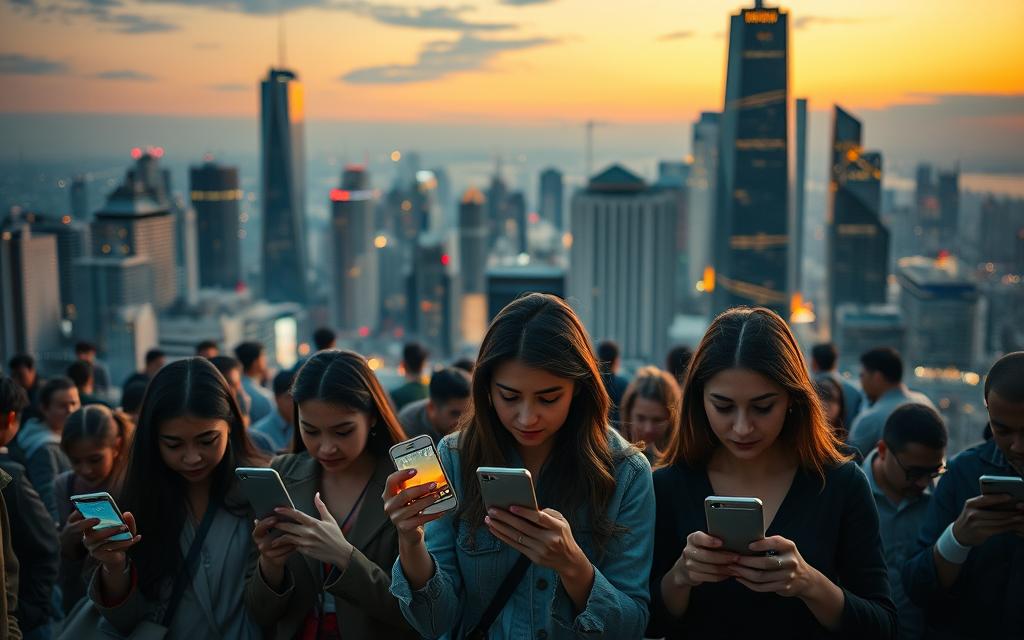
Fast networks led to a boom in mobile apps. App stores grew, with tools and fun apps for everyone. This changed how we use our devices.
Streaming services like Netflix and Spotify used 4G for better content delivery. No more waiting for videos to load.
The rise of social media changed how we talk to each other. Sites like Facebook and Twitter became mobile-first. We’re always connected and sharing.
Economic and Social Connectivity Enhancements
The smartphone revolution opened new business doors. Companies could reach customers anytime, anywhere. This changed marketing and customer service.
Mobile payments and banking apps made life easier. No need for cash or cards. This changed how we shop and manage money.
| Feature | 3G Technology | 4G Networks | Impact Difference |
|---|---|---|---|
| Maximum Speed | 2 Mbps | 100 Mbps | 50x improvement |
| Latency | 100-200 ms | 20-30 ms | Near-instant response |
| Video Streaming | Low quality with buffering | HD quality seamless | TV-like experience mobile |
| App Capabilities | Basic functionality | Complex, rich applications | Desktop-like mobile apps |
Enabling Remote Work, E-Commerce, and Globalisation
4G networks made remote work possible. Professionals could video call, access documents, and work with teams anywhere. This started the remote work trend.
E-commerce grew fast with mobile shopping. Quick price checks and purchases changed retail. Old stores had to adapt or lose out.
Globalisation sped up with 4G networks. Small businesses could reach the world. Social media brought cultures closer. The world felt smaller and more connected.
5G: Next-Generation Communication
The world of communication has reached a new peak with 5G networks. This technology, launched in 2018, changes how we connect and use the internet. It’s a big leap forward.
Key Features and Technological Advances
5G brings three main improvements: faster speeds, quicker responses, and more devices connected. These changes open up new possibilities that were once thought impossible.
Low Latency, High Throughput, and Internet of Things Integration
5G’s ultra-low latency is under one millisecond. This makes it perfect for real-time tasks. Surgeons can do remote operations, and robots can work together on assembly lines.
It also offers high speeds, up to 20 gigabits per second. This means fast downloads and smooth streaming of high-definition content.
5G also supports a huge number of devices, up to one million per square kilometre. This is key for a fully connected world where everything talks to each other.
Future Applications and Considerations
5G is more than just fast internet. It’s the foundation for new technologies that will change our cities, transport, and daily lives.
Smart Cities, Autonomous Vehicles, and Privacy Challenges
Smart cities are a big promise of 5G. They can use sensors to manage traffic, energy, and services better. This leads to less traffic, lower emissions, and a better life for people.
The growth of autonomous vehicles also relies on 5G. Self-driving cars need to talk to each other and the world around them fast. 5G’s low latency helps them make quick decisions, which could cut down accidents and change how we travel.
But, there are big privacy challenges with 5G. The more devices that connect, the more data is collected. This raises concerns about personal information security.
To tackle these privacy issues, we need strong security and clear data policies. Everyone involved must work together to protect our privacy and data in the 5G era.
Conclusion
The journey from telegraph to 5G is truly remarkable. It shows how human connection has evolved over time. Each step forward built on what came before, linking us all more closely.
This path shows our endless quest for better ways to communicate. We’ve moved from Morse code to video calls in an instant. Each step has made our world smaller and our interactions richer.
The future of communication looks even more exciting. Technologies like 6G and quantum communication are on the horizon. They promise to change how we work, learn, and connect with each other worldwide.
The real magic is in how these advancements have changed our lives. They’ve transformed business, education, healthcare, and how we socialise. This journey shows that progress speeds up when we build on what we already know.
As we look to the future, the outlook is bright. The leap from telegraph to 5G shows our boundless creativity in connecting the world. It’s a testament to our ability to keep pushing the limits of what’s possible.
FAQ
What was the first major breakthrough in long-distance communication technology?
The telegraph, invented by Samuel Morse, was a big leap forward. It used Morse code to send messages over long distances. This changed how news and business communications worked.
How did the telephone change personal and professional communication?
Alexander Graham Bell’s telephone made voice calls instant. It changed how we talk and do business. Now, we can have real-time conversations from anywhere, making life and work easier.
Who pioneered wireless radio communication, and what were its early uses?
Guglielmo Marconi made wireless radio possible, sending signals across the Atlantic. It was used for safety at sea, news, and entertainment. It became a key part of mass media.
How did television evolve from its early mechanical forms to modern electronic sets?
John Logie Baird and Philo Farnsworth led the way to electronic TVs. Colour TV and global standards made it a big part of culture and learning.
What were the key developments that led to the creation of the internet?
The internet started with ARPANET, a US Defence project. Tim Berners-Lee’s World Wide Web and early tools like email and browsers made it what it is today.
How did mobile networks progress from 1G to 4G?
Mobile networks went from 1G to 4G, adding new features. 2G brought SMS and data, 3G mobile internet, and 4G fast data for streaming and apps.
What distinguishes 5G from previous generations of mobile technology?
5G is faster, has lower latency, and more capacity than 4G. It supports new tech like IoT, smart cities, and healthcare. But, it also raises privacy and infrastructure concerns.
How has communication technology impacted global business and society?
Tech has sped up globalisation, making remote work and e-commerce possible. It’s changed industries, education, and culture. It’s made connecting easier and faster.
What role did innovation patents play in the development of communication technologies?
Patents, like Bell’s for the phone and Marconi’s for radio, were key. They protected ideas and encouraged more innovation. They helped set standards and drive progress.
Are there ongoing privacy and security challenges with modern communication technologies like 5G and the Internet of Things?
Yes, 5G and IoT bring new privacy and security issues. They make data vulnerable and raise surveillance risks. We need strong rules to protect users and systems.
